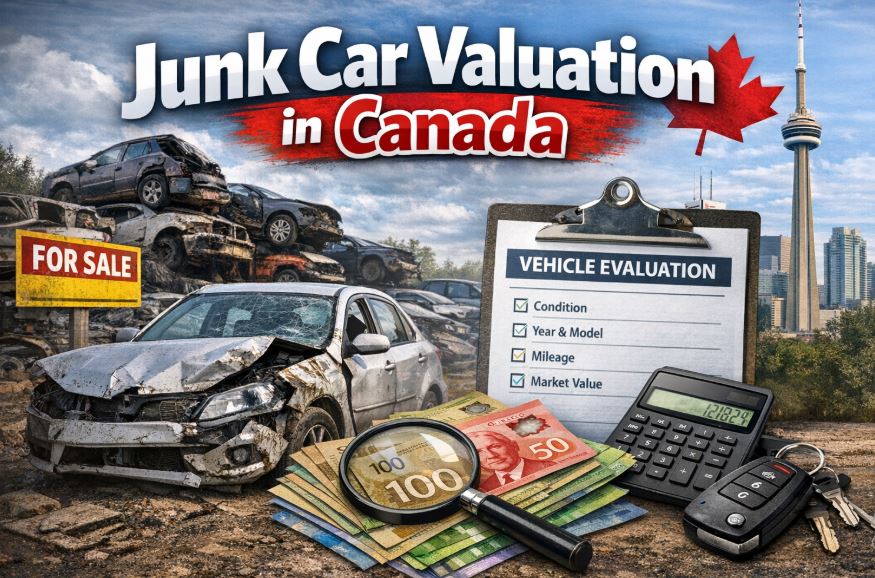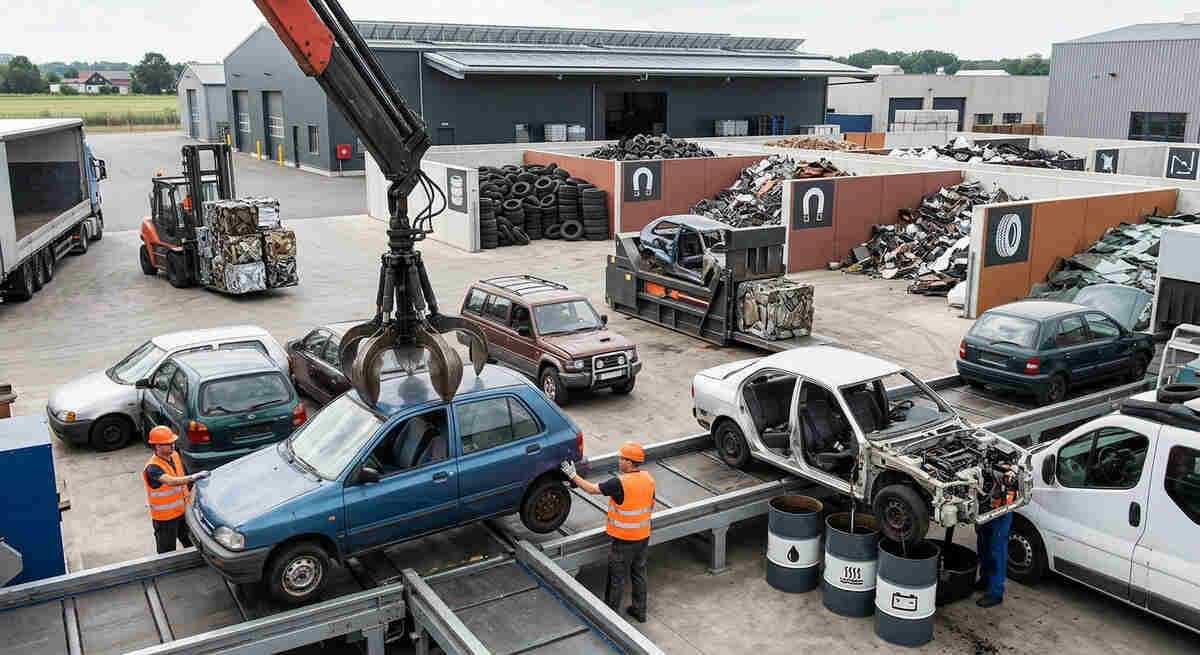

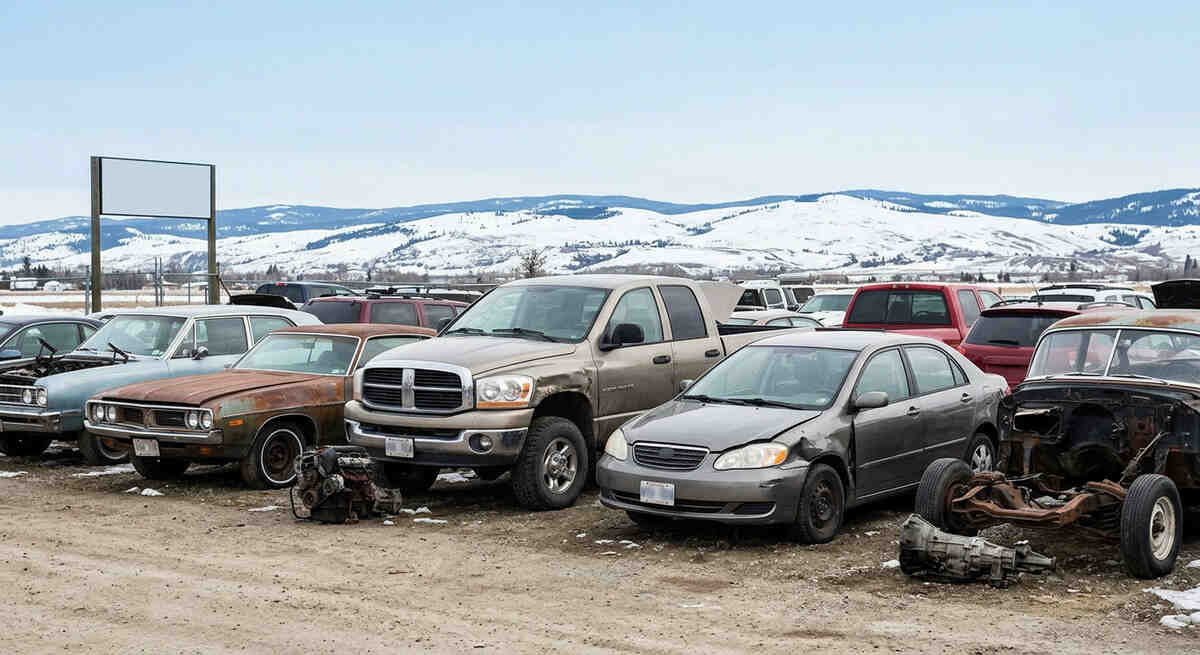
In the changing automotive environment in Canada – junk cars are no longer considered as end-of-life vehicles that are to be scraped at scrap yards. Instead, they are a valuable portion of the secondary market, which provides opportunities to buyers, recyclers, exporters, and resellers of auto parts. Due to the increasing cost of vehicles, disruptions in the supply chain, and a greater demand for low-cost parts, the value of particular types of junk cars has risen sharply across the country.
Most junk cars, whether obtained via salvage auctions, individual sellers or scrap car removal services, still have a lot of value in their parts, repair possibilities, or resale values. Knowledge of what kind of junk cars are worth buying can allow businesses and individuals to make informed investment choices and to be involved in sustainable automotive recycling practices.
What defines a “Junk Car” in Canada?
A junk car is generally a vehicle that is no longer fit to be used in the road due to age, damage, mechanical failure or high cost of repairs. However, “junk” does not mean worthless. In most instances, such cars still have usable parts, recyclable materials or can be re-assembled and re-sold.
In Canada, junk cars are usually classified into:
- Salvage cars (write-offs by insurance companies)
- End-of-life vehicles (ELVs)
- Non-running or damaged cars’
- Old models or high mileage.
Depending on the condition, demand and market trends, each category has varying degrees of value.
Key factors that determine the value of junk cars
To dive into the different kind of junk cars that one should buy, it is important to know what makes them worth buying:
- Demand of Parts: Vehicles that have parts that are in demand (engines, transmissions, electronics) would be more expensive.
- Make and Model Popularity: Popular brands are frequently more resale and parts popular.
- Metal Content: The scrap value depends on the current market prices of metal (steel, aluminum, copper).
- Condition: Non-running cars that are in good condition (have not been used for a long time) can be valuable too.
- Repair Potential: It is possible to refurbish some junk cars and sell them at a profit.
- Export Demand: There are some vehicles that are in a high demand in foreign markets.
The types of junk cars that are worth buying in canada
1. Salvage Title Vehicles
Salvage title vehicles are those which insurance companies have reported a total loss to due to accidents, flooding, fire damage or other major incidents. Although most of these vehicles have been labeled as salvage, in most cases, they still have significant value, particularly where the damage is not structural or can be repaired at an affordable cost. Salvage cars are a common phenomenon in Canada, where they are sold through auctions and special platforms, which implies that they are affordable to the purchaser, who also wants to have a cost-effective opportunity.
Why They’re Valuable:
- Less expensive to buy than clean-title vehicles.
- High after repair resale margins.
- Good availability at auctions and via the internet.
Such vehicles are very appealing to the mechanics, rebuilders and exporters.
2. Accident-Damaged Cars
One of the most ubiquitous types of junk cars in Canada are those that have suffered some accidental damage, which can still have a significant value depending on the amount of damage. Cars that are involved in accidents usually have a lot of worth provided that the vital parts of the car are not damaged.
What makes them Worth Buying:
- Often engines and transmissions are still in operational condition.
- The body parts (doors, bumpers, mirrors) can be salvaged.
- Perfect in dismantling and resale of parts.
Minor to moderately damaged vehicles can also be rebuilt at a relatively cheap price.
3. Non-Running Vehicles
Vehicles that are not running are usually seen as having no or minimal use and value, but in the real sense, they may actually be an excellent investment. Mechanical problems may include failure to start, dead battery or engine problems, which make these cars unable to start. Nevertheless, most of their parts are still intact and working so they can be utilized in the junk car market.
Affordability is one of the key factors that make these vehicles worth purchasing. They are normally sold at extremely cheap prices, and the purchaser can either repair it or strip it down to retrieve the useful parts. These components (catalytic converters, alternators, batteries and electronic systems) can be resold separately at a profit. In other instances, the problem that may have caused the car to stop running could be a minor and cheaply correctable problem and that would provide an opportunity to get the vehicle running again, and resell the vehicle at a premium price. This predisposes non-running cars to become the most appealing to auto repair specialists and salvage buyers.
4. High-Mileage Vehicles
Cars that are high-mileage are normally no longer used in the regular market since they are worn and battered and therefore they no longer have any use in the regular market. Most of these vehicles, particularly those that belong to a reputable brand, are designed to endure and may even be used to extract useful components, even after many years of use.
These cars are worth purchasing due to the fact that the engines and the ways of transmissions can be easily rebuilt or reused. Also, there is a steady demand for replacement parts of high mileage vehicles, as many drivers seek low cost solutions to maintain their own cars. The purchase cost of these vehicles is also a relatively low cost, making these vehicles an attractive choice to buyers looking to make a low-risks investment. Durable and long-lasting models are likely to perform especially well in this category, providing consistent returns in terms of resale or refurbishment of parts.
5. Other vehicles with rare and no longer manufactured parts.
Older cars, particularly those with out of production models or only a few production lines, can be surprisingly valuable at the junk car market. With the manufacturers halting to manufacture some parts, there is a high demand of the existing parts, so there are opportunities to buyers who could source these vehicles.
The peculiar feature of these cars is that they serve niche markets, such as collectors, enthusiasts and restoration experts. Although the vehicle itself might no longer be roadworthy, there may be individual parts that are very scarce and therefore command premium prices. Consumers who know the worth of rare parts can gain a lot by investing in older vehicles as they tend to yield higher returns than more common models.
6. Scrap Cars with high metal content
There are junk cars whose value is largely dependent on the quantity of metal that is found in them as opposed to the quantity of mechanical parts. The cars produced using large quantities of steel, aluminum and other recyclable materials are of great value in the scrap industry.
These vehicles can be purchased since the price of scrap metal is steady and its price is directly dependent on the market price. The trucks, SUVs and old cars usually have larger amounts of recyclable metal and are therefore more lucrative to be recycled. By selling the vehicles to scrap yards or recycling facilities, which are easy and reliable means of generating income, buyers can quickly liquidate these vehicles.
7. Vehicles having Valuable Components.
Some of the junk cars are in high demand due to the precious parts which they possess. Although the car may be in a very bad condition or even out of repair, certain parts still can yield a very high payoff.
The examples of Valuable Components:
- Catalytic converters’ (have precious metals such as platinum, palladium)
- Engines and transmissions
- Electronic modules and Infotainment systems
- Alloy tires and wheels
Even highly broken automobiles may be lucrative provided that such elements are not damaged.
8. Fleet and Commercial Vehicles
Commercial and fleet vehicles such as taxis, delivery trucks, and company cars are used over the years and usually end up in the junk market. Even with high usage, such vehicles have the potential to provide significant value with the maintenance history and standardized components.
Why they are worth buying:
- Regular maintenance history
- Fleet to fleet exchangeable parts
- Good resale and export market demand
These cars are able to become a dependable means of a stable value
How to purchase valuable junk cars in Canada
Junk vehicles can be sourced by buyers in various ways, some of which include:
- Online auction sites (salvage).
- Removal services of scrap cars.
- Dealership trade-ins
- Private sellers
- Auto recyclers and junkyards
The sources have varying pricing models and conditions of the vehicles, so it is significant to pay attention to it.
Tips for Buying Junk Cars Profitably
- Examine Carefully: Before buying a car – always examine the condition of the car and the worth of its parts.
- Check Vehicle History: Learn about previous damage, ownership and title status.
- Add up Total Costs: Add transportation, repairs and storage costs’
- Keep Track of Markets: Keep in touch with part demand and scrap metal prices.
- Adhere to Regulations: make sure that you comply with Canadian vehicle and environmental regulations
Environmental and economic benefits
Not only does investing in junk cars profit but is also ecologically responsible. Recycling of vehicles will lessen wastes in landfills, save on natural resources, and reduce the need to produce more. The automotive recycling sector in Canada is an essential part of sustainability as well as providing thousands of jobs across the country.
Conclusion
The junk cars in Canada are an imminent and less appreciated market with high potential of value. Whether it is a junk car with a good salvage value or an accident damaged car with a good salvage value, or a high mileage unit or scrap metal supply, each type of junk cars can be a profitable opportunity to buyers who know their value.When considering the correct categories, condition and demand and using dependable sourcing channels, businesses and individuals could turn the so-called junk into a worthwhile investment. With the automotive industry ever-changing, the value of recycling and reusing vehicles is only going to increase- making junk cars a brilliant and viable decision that can be made in the future.